ASIT Structured Creativity Method: Systematic Innovation
What is ASIT®?
"Think Inside the Box" - The method that transforms your constraints into innovation
ASIT is a structured creativity method offering two complementary intervention modes, usable separately or in cascade:
ASIT Conception
Inventing innovative concepts
(products, goods, services or processes).
ASIT Conception enables the creation of differentiating concepts.
Ideal for:
- Creating an innovative offering that opens new markets
- Differentiating in a competitive or saturated market
- Proposing a differentiating response to a tender
- Adding a differentiating service to your product
ASIT Conception generates breakthrough concepts that enhance your current expertise, to strengthen your positions or conquer new markets. Ideal for creating a successful offering, its V2, or associating a service with it.
ASIT Solving
Solving complex or historical problems creatively.
ASIT Solving transforms your blockages into innovative solutions.
Ideal for:
- Solving the technical challenge of a breakthrough concept
- Bypassing a competing patent
- Solving an old or recurring problem
- Simplifying a solution that has become too complex
ASIT Solving complements your teams' expertise by systematically exploring all possible solution paths, even the most counter-intuitive ones.
Far from brainstorming and its "predictable" side, ASIT enables, for example, the use of constraints in a situation to allow a team to innovate.
ASIT comprises tools that allow "manipulating" the problem in all directions and envisaging solutions or innovations that would not naturally come to mind (or would only come much later from a competitor?).
ASIT Vs Brainstorming Vs AI Comparison
Our LinkedIn article explains ASIT method's innovation capabilities and compares them with Brainstorming or AI promises:
"AI and brainstorming are often considered major innovation levers. However, analysis of our data (from hundreds of brainstorming sessions since 2002) and tests conducted with 12 AIs show that these approaches don't always deliver on their promises."
ASIT in 6 Key Points
ASIT® (Advanced Systematic Inventive Thinking) is a structured creativity method enabling the solution of blocking problems or the design of new products (goods or services) or new processes.
Scientific Approach
ASIT is the result of more than 20 years of work on the simplified implementation of a very effective but complex scientific theory: TRIZ. In short: ASIT is a creativity method derived from TRIZ.
Systematic Approach
To find ideas: whilst brainstorming digs "here or there" according to inspirations, the ASIT creativity method systematically ploughs the entire problem area. We find because we search everywhere without taboo or preconceptions!
Breakthrough or incremental
ASIT favours innovations that truly solve problems and bring new experiences by using existing potential.
Product AND Service Innovation
ASIT poses a series of stimulating questions that sweep all possibilities. It's effective in tech, services, business models, processes…
Quick to learn
It may seem difficult to learn such a different method, but our training makes you autonomous in 2 days through practice on YOUR concrete cases.
Structured Method
A 3h workshop generates dozens of effective, surprising ideas, as participants see their problem differently, guided by this structured creativity method.
User Testimonials
What ASIT users say
8 client testimonials from SolidCreativity on the effectiveness of the ASIT method

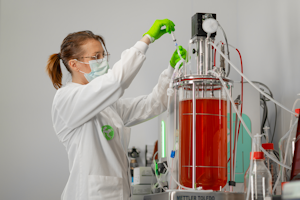

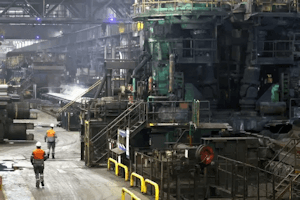


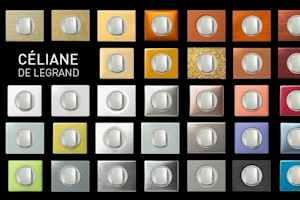

Video testimonial: Effectiveness of ASIT + Agile for R&D
Want to see ASIT in action?
Discover how this method can transform your projects during a live demonstration via video call.
See ASIT in actionASIT in Example
Police security barriers are easily knocked over when there are many people pushing them.
When people are asked to solve this problem, they generally propose solutions that prevent demonstrators from reaching the barrier or they attempt to firmly fix the barrier to the ground (this is the classic causal approach and its lot of known solutions). This reflex doesn't give good results and they are not innovative (because everyone proposes them and we still have the problem). Let's see how ASIT helps solve it. The observed phenomenon can be summarised as:
"The more demonstrators near the barrier, the less stable it is."
ASIT now proposes we seek a solution aiming for the following result:
"The more people near the barrier, the more stable it is"
So we must imagine a barrier that stabilises when there are people nearby… Do you have an idea?
It would suffice to have a barrier with a base on which demonstrators rest. The more there are, the more stable the barrier. This is convergence: we aim for innovative solutions because we know what they might look like.
This barrier exists in some countries and gives good results, but someone had to think of it. ASIT serves to find these sometimes obvious solutions that are nevertheless difficult to find.
Unfolding Example
If, during the preparation phase or the use of preliminary conditions, no solution was found, then we decide to unfold the ASIT method with its tools during a workshop. Here are the first 5 minutes:
1 - Preparation phase for the barrier problem:
- List of objects (we take a photo of the problem): People, barrier, ground, space to protect.
- Desired action: prevent the barrier from falling
2 - First ASIT question stimulating creativity, written with the first tool (unification) and the first object (people) to fulfil the desired action:
- "How can the people prevent the barrier from falling?"
3 - Group reflection on this question and generation of ideas that we note:
- People are on a platform fixed to the barrier
- People must hold the barrier otherwise it falls on them
- …
When the group (or single person) has no more ideas for this question, then we move to the next question with the next object, then the next tool (different grammatical structure of the question) when we've finished the list of objects.
At the end of the session we have A CONVERGENT RANGE of innovative ideas.
We see in this unfolding that common ideas like "electrify the barrier", which systematically comes up in brainstorming sessions, has no chance of troubling the reflection which is guided by the method on new axes.
The example in video
Want to see ASIT in action?
Discover how this method can transform your projects during a live demonstration via video call.
See ASIT in actionASIT Functioning
ASIT is a structured creativity method with: a beginning, an unfolding and an end.
ASIT Method Principle
The ASIT method enables you to exploit the innovation mechanisms that constitute the DNA of all innovation (product, service, process). These innovation mechanisms naturally appear in the brain when having an innovative idea (before going to bed or in the shower for example), but the strength of the ASIT method is being able to mobilise them on demand, systematically.
Method Unfolding
After the preparation phase, ASIT stimulates individual or group reflection by displaying questions constructed with the different tools composing the method. Each tool has a specific role in conditioning the user and considering the problem.
The preparation phase, which is somewhat similar to functional analysis, allows specifying and formulating the problem so it can be solved. It involves differentiating the problem from its cause for example, and listing the elements constituting the problem or its close environment; indeed, certain elements are not necessarily part of the problem but can be part of the solution.
The tools, one by one, systematically, will consider the problem, its components and arrangements of both to solve the identified problem. The method unfolds through writing questions stimulating each participant's creativity (alone or in groups up to eight). Each tool brings its grammar to writing questions, whose elements were defined during the preparation phase.
At the end of idea generation, these are evaluated, sorted and selected for presentation, decision-making and development.
Convergence
ASIT is a convergent creativity method, meaning it won't favour generating numerous unbridled ideas as in divergent techniques (cf. Brainstorming) but will systematise generating ideas meeting precise criteria, creating stimulating constraints. This is achieved through stimulating questions written with ASIT. Through their construction, questions generated by the ASIT method make the group reflect around a solution axis rather than on problem causes (we already have so many methods to do this: 5 Whys, Ishikawa, A3, root cause...).
One of the principles used by ASIT is that constraint favours creativity. TV hero MacGyver's creativity, inhabitants of disadvantaged countries' inventiveness or our creative capacities during problems are all examples: having few means is sometimes very stimulating to find innovative solutions. Convergence uses this principle and puts us in a position, not only to find solutions, but especially to find surprising or even revolutionary solutions.
The Five ASIT Creative Solving Tools
ASIT has 5 tools that are both 1) a response to cognitive biases and 2) the explanation of all innovations around us.
- Unification: Use existing objects differently - Optimises existing and uses constraints
- Multiplication: Add elements under constraint - Develop without diverging
- Division: Reorganise existing - Very suited to processes or complex devices
- Breaking Symmetry: Introducing variation enables very strong innovation
- Subtraction: Remove an element - Unexpected, elegant and breakthrough solutions
Want to see ASIT in action?
Discover how this method can transform your projects during a live demonstration via video call.
See ASIT in actionASIT Uses
ASIT is usable to solve or improve:
- physical problems (the elements considered are objects or parts of devices, …)
- structures and human relations (we consider people, their function, their relations, …)
- processes (we study stages, connections, conditions, …)
- services (since everything can be considered as an object).
ASIT users in the United Kingdom range from individuals, micro-enterprises, SMEs or large groups such as Michelin, Thales or EADS.
Read comments from ASIT users here (commercial site).
Applications
With an ASIT creativity session you will find a range of innovative solutions for, for example:
- Solving an old or blocking problem in an innovative way (product, service, process or organisation)
- Finding alternative solutions rather than correcting and complicating a historical solution
- In technology: Bypassing a patent by finding a new solution
- Anticipating possible future competitive solutions and protecting against them
- Generating, evaluating and daring to propose a differentiating response during a tender
- Finding creative conceptual solutions then making them concrete as market innovations
ASIT Solving and ASIT Conception
In innovation, everything seems to revolve around two challenges: solving creatively and designing innovatively*.
Innovative Conception
Diversify your offerings to remain competitive: innovative conception creates products and services that set you apart durably.
Creative Solving
Faced with the same problems as your competitors, only an innovative solution differentiates you. Creative solving transforms your blockages into competitive advantages.
*This is close to the concepts/knowledge proposed by KCP, except for the ideation phase. With ASIT one can chronologically conceive then solve to make it feasible.
Want to see ASIT in action?
Discover how this method can transform your projects during a live demonstration via video call.
See ASIT in actionHistory
TRIZ
Initiated by Genrich Saulovitch Altshuller from the 1940s in Russia, TRIZ (Teorija Reshenija Izobretateliskih Zadatch = theory of inventive problem solving) is based on patent analysis and the identification of common points between innovations. TRIZ is a proven algorithmic approach for solving technical problems. TRIZ is enhanced with tools that require a certain expertise. TRIZ was introduced in France around 1998.
From TRIZ to ASIT
ASIT (Advanced Systematic Inventive Thinking) is a method invented by Dr Roni Horowitz to rationalise the application of TRIZ theory and increase its scope and effectiveness. ASIT enables problem solving (creative solving) and the design of new products and services (innovative conception), in all fields: technology, processes, organisation, services and business models. Introduced in France in 2004 by SolidCreativity, ASIT is today widely recognised for its effectiveness: exhaustiveness of solutions found, ability to unblock situations, use of constraints to mobilise a group, creativity rate of ideas. This recognition is based on solid scientific validation (doctoral thesis 1999, publications in Harvard Business Review, European Union, 14+ academic articles), adoption by large companies (Airbus, Michelin, ArcelorMittal) in varied sectors ranging from aeronautics to financial services, and prestigious engineering schools. Discover all scientific evidence and client testimonials →
Some dates
Genadi Filkovski introduced TRIZ theory in Israel by simplifying it to make it more accessible.
1986 Roni Horowitz follows his creative solving courses.
1990 Genadi Filkivski leaves Israel for the USA and stops his work on TRIZ.
1990 Roni Horowitz in turn gives courses in creative solving.
1994 Roni Horowitz starts a doctorate which he completes in 1999, this is the birth of ASIT.
2002 Pascal Jarry discovers ASIT and introduces it in France.
2003 Experimentation, patent filings to prove effectiveness, then experience sharing.
2004 Pascal Jarry founds SolidCreativity which continues to develop ASIT, notably with laboratories.
2011 SolidCreativity improves and publishes ecoASIT systematic eco-innovation method.
2012 Pascal Jarry develops FASiT, a simplified and rapid version of ASIT.
2014 Pascal Jarry develops ASIT-BIM, dedicated to business model innovation.
2019 Pascal Jarry develops ASIT 2.0, statements are replaced by questions for greater effectiveness.
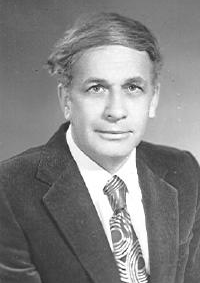
Genrich Altshuller
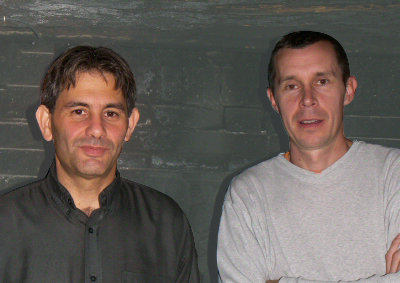
Roni Horowitz and Pascal Jarry
Questions and Answers about ASIT
Certain questions or remarks often recur about ASIT, consult the "Frequently Asked Questions" section on the ASIT creativity method.
Structured creativity and systematic innovation
What is a structured creativity method?
A structured creativity method systematically guides inventive thinking instead of relying on chance. Unlike brainstorming, which depends on the volume of spontaneous ideas, structured creativity uses precise tools to explore possibilities that intuition alone cannot find. ASIT is the most accessible structured creativity method: 5 tools, 2 days to master, measurable results from the very first 3-hour workshop.
Why does systematic innovation deliver better results than brainstorming?
Brainstorming produces ideas the team would have found anyway. Systematic innovation forces the exploration of counter-intuitive directions no one would have considered spontaneously. Our data from hundreds of workshops shows brainstorming scores 2/10 in innovation capability, while a structured approach like ASIT achieves 10/10. The difference: truly differentiating concepts, not just predictable improvements.
How to solve a technical problem creatively?
Creative problem solving for technical challenges relies on one principle: use the problem's constraints as an innovation lever rather than suffering from them. ASIT Solving guides teams to systematically explore all solution paths, including those that seem paradoxical. The result: elegant solutions where expertise alone was stuck. Airbus, Michelin and Thales use this approach to unblock their most complex technical challenges.
ASIT method information, EEAT, authority, credibility
Are you hesitating between ASIT and other creativity methods? This section explains why ASIT is the reference method for industrial innovation and R&D, with concrete evidence of its effectiveness.
Proven experience since 1996
- Created in 1996 by Dr Roni Horowitz (Israel) - doctoral thesis validated at Tel Aviv University
- Introduced in France in 2004 by Pascal Jarry, innovation expert with 20+ years of experience managing creative teams across 3 continents - LinkedIn
- 12 patents filed in 1 year thanks to ASIT, several of which have been commercialised - see the 12 patents
- Thousands of workshops delivered since 2004 in France and French/English-speaking Europe
- Measured results: +35% turnover in 3 months for an SME, validated technical solutions in Airbus/Michelin/ArcelorMittal R&D
Scientific and academic expertise
- Solid scientific foundation: Roni Horowitz's doctoral thesis (1999) - detailed page
- Validated academic publications:
- Harvard Business Review: "Finding Your Innovation Sweet Spot" (2003)
- European Union: "ASIT method of creative resolution" (2009)
- 14+ scientific publications citing ASIT - see complete bibliography
- 3 reference books published by SolidCreativity (verifiable ISBN):
- ASIT, Method for Innovative Solutions (ISBN 2-9522866-0-4)
- ASIT - Innovative Design Method (ISBN 978-2-9522866-1-9)
- Structured Creativity - From TRIZ Principles to ASIT Method (ISBN 2-9522866-3-9)
- Registered trademarks: ASIT®, ecoASIT®, ASIT-BIM® - SolidCreativity European exclusivity - verifiable at INPI
- Expert trainers: all certified after intensive training, consultants with triple profile (sector expertise + large corporation management + entrepreneurship)
Authority recognised by industry leaders
- Large corporation clients with verifiable testimonials:
- Airbus: "Best training ever had!" - English-language training for A320neo engineers - full testimonial
- Michelin: "What strikes you about ASIT is its efficiency in terms of both quantity and quality of ideas. Two themes carrying competitive advantage successfully addressed" - full testimonial
- ArcelorMittal: Innovative solutions generated in 3 months - video testimonial
- Thales: "Efficient and simple solutions"
- + Legrand, Photonis, Caisse d'Épargne, numerous SMEs - complete list
- Academic recognition:
- Official Wikipedia page: ASIT on Wikipedia
- Taught in engineering schools and universities
- Cited in 14+ theses and scientific publications
- Specialist press:
- L'Express : "SolidCreativity specialist in the ASIT method"
- Intelligence Media, sector-specific R&D journals
- Official YouTube channel: SolidCreativity - validated video content
Trust and transparency
- Qualiopi certification: SolidCreativity has obtained Qualiopi certification for training activities
- 9.8/10 rating based on 68 verifiable client evaluations
- Unique 1-year guarantee: if after your training you encounter difficulties during an ASIT workshop, we will intervene to solve the problem together
- Measurable data: 12 patents filed in 1 year, +35% turnover in 3 months for an SME, concrete solutions in R&D
- Enhanced confidentiality: no client mentioned without explicit consent - source
- Active CSR charter: responsible use of artificial intelligence - download the charter
- Authentic and verifiable client testimonials - see all testimonials
More information
ASIT Method
Training
Sustainable
Innovation
Business Model
Innovation
Methods
Comparison
ASIT
Bibliography
Agility for All
Industries